Written by: Ch Amer Bashir Anjum
In the complex world of international politics, some moments stand out not just as achievements, but as turning points. The easing of tensions around the Strait of Hormuz and the progress toward a broader understanding among key stakeholders mark one such moment—one that highlights Pakistan’s growing role as a calm, credible, and constructive diplomatic voice.
This development did not happen overnight. It is the result of consistent, balanced, and thoughtful engagement. At a time when many nations are caught in cycles of confrontation, Pakistan has chosen dialogue over division, and cooperation over conflict.
Bringing different sides closer, even in a limited way, reflects maturity, patience, and trust, qualities that define effective diplomacy.
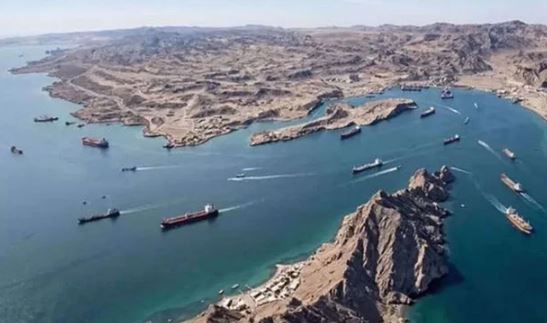
The Strait of Hormuz is not just a narrow waterway; it is one of the world’s most important energy routes.
A large portion of global oil and gas supplies passes through it. Any disruption here affects not only the region but economies across the globe. Ensuring its stability and openness is therefore critical for global economic health.
Pakistan’s role in helping ease tensions and support the reopening of this vital route is significant. It sends a strong message that the country is not only concerned about regional stability but is also willing to play a meaningful role in maintaining it. This is diplomacy with purpose.
The positive impact of this development is already visible. Greater stability in energy supply can help control price fluctuations, bringing relief to both developed and developing economies.
Gulf countries, whose economies are closely tied to energy exports, stand to benefit directly. For Pakistan, this stability also matters deeply, as millions of its citizens live and work in the Gulf, contributing both to those economies and to Pakistan through remittances.
Perhaps the most important outcome, however, is the growing trust in Pakistan’s diplomatic role.
At a time when global tensions are high, earning the confidence of multiple sides is no small achievement. It shows that Pakistan is increasingly seen as a balanced and reliable partner—one that values peace, stability, and mutual respect.
Looking ahead, there is growing optimism.
Soon, the world may witness a broader peace understanding, one that not only ensures the long-term stability of the Strait of Hormuz but also brings greater calm to the region and new opportunities for global prosperity.
Such a development would not only reduce tensions but also strengthen economic cooperation and shared growth.
As Martin Luther King Jr. once said, “Peace is not merely a distant goal, but a way to reach that goal.” This simple yet powerful idea reminds us that peace is not just an outcome—it is a process, built through effort, trust, and sincerity.
Pakistan’s recent diplomatic efforts reflect exactly that spirit. They show that even in a divided world, progress is possible when countries choose engagement over isolation and understanding over conflict.
This is more than a diplomatic success—it is a sign of what is possible. A more stable region, a stronger global economy, and a future shaped not by conflict, but by cooperation.
Let peace prevail.