Islamabad : Prime Minister Shehbaz Sharif on Monday said that the growing commercial ties between the private sectors of Pakistan and China signal the beginning of a more robust and dynamic phase in bilateral economic cooperation.
He noted that enhanced collaboration with China in key sectors such as industry, agriculture, and technology would not only strengthen Pakistan’s export potential but also create new employment opportunities across the country.
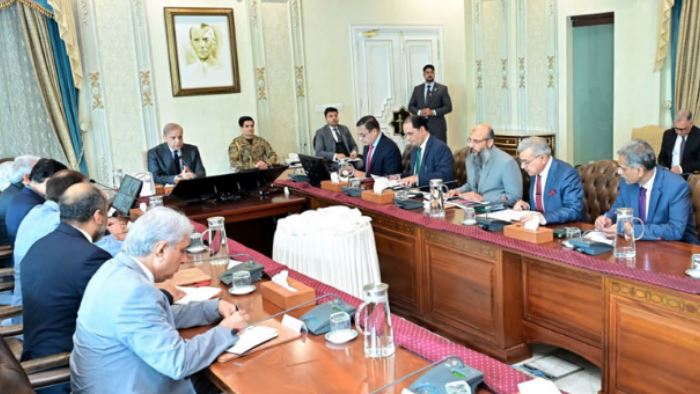
The prime minister chaired a detailed review meeting to assess the progress on agreements and Memorandums of Understanding (MoUs) signed during the Pakistan-China Business-to-Business (B2B) conference held during his recent visit to China.
According to a statement from the PM Office Media Wing, he stressed the need for swift conversion of these MoUs into formal agreements and operational joint ventures.
The meeting was attended by Federal Ministers Rana Tanveer Hussain, Ahsan Iqbal, Ahad Khan Cheema, and Shaza Fatima Khawaja, along with senior officials from relevant ministries.
During the session, the prime minister also decided to personally oversee monthly review meetings to ensure continuous monitoring of progress on the outcomes of the B2B conference.
He directed authorities to ensure effective implementation of cooperation between the China Academy of Agricultural Sciences and the Pakistan Agricultural Research Council (PARC), emphasizing that such partnerships, combined with modern agricultural practices and joint investment initiatives, could significantly transform Pakistan’s agriculture sector.
Officials informed the meeting that the B2B conference held in Hangzhou on May 24 brought together 123 Pakistani and 436 Chinese companies, resulting in the signing of 207 MoUs worth approximately 7.54 billion US dollars.
These agreements cover a wide range of strategic sectors, including battery energy storage systems, artificial intelligence, mobile phones, and handheld devices.
Additional understandings were also reached in areas such as fertilizers, seeds, advanced irrigation technologies, fisheries, and food processing.
It was further highlighted that further MoUs were signed to promote joint investment in high-tech industries, particularly biotechnology and vaccine production.