Islamabad: The federal government has presented the budget for the financial year 2026–27 in the National Assembly, with a total outlay of Rs18,771 billion and a projected budget deficit of Rs5,226 billion.
According to budget documents, the government has set a tax revenue target of Rs15,264 billion for the next fiscal year. Defence expenditure has been allocated Rs3,000 billion, while civil administration costs stand at Rs1,071 billion.
The largest expenditure head remains debt servicing, with Rs8,054 billion earmarked for interest payments. The Benazir Income Support Programme (BISP) has been allocated Rs838 billion, reflecting a 17 percent increase compared to the previous year.
For the social sectors, Rs77 billion has been allocated for education and Rs22 billion for health.
The budget also proposes a 7 percent increase in salaries and pensions of government employees, along with a 10 percent raise in the minimum wage. The government has decided to abolish the surcharge on salaried individuals, although it will remain in place for the banking, oil and gas exploration, and fertilizer sectors.
According to official data, the Federal Board of Revenue’s (FBR) tax-to-GDP ratio has reached 10.3 percent.
On taxation measures, the budget proposes new federal excise duties on imported vehicles, including SUVs and cars with engine capacities between 2,000cc and 3,000cc. Luxury electric vehicles valued above Rs20 million will also be taxed, while electric bikes, rickshaws, and buses will continue to benefit from concessional rates.
The budget session saw the presence of key political leaders, while opposition members staged protests inside the National Assembly, creating disruption during the proceedings.
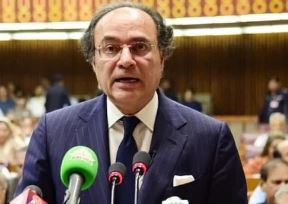
Finance Minister Muhammad Aurangzeb, presenting the budget, termed it an honour to present the third budget of the current government. He thanked Prime Minister Shehbaz Sharif and PPP Chairman Bilawal Bhutto Zardari for their cooperation.
He said that Pakistan’s armed forces gave a strong response to Indian aggression, calling the success of “Bunyan-um-Marsoos” a proud moment in national history, adding that strong defence contributes to economic strength.
The finance minister also highlighted the strategic importance of the Pakistan-Saudi Arabia agreement, saying it would further strengthen bilateral relations.
The budget provides significant relief to the salaried class through reduced income tax rates across multiple slabs. For annual incomes between Rs2.2 million and Rs3.2 million, the tax rate has been reduced from 23 percent to 20 percent. For Rs3.2 million to Rs4.1 million, the rate has been cut from 30 percent to 25 percent. For Rs4.1 million to Rs5.6 million, it has been reduced from 35 percent to 29 percent, and for Rs5.6 million to Rs7 million, from 35 percent to 32 percent.
The government has also abolished super tax across six slabs, providing further relief to high-income earners.
Significant reductions have been announced in property-related taxes for filers, with the aim of boosting construction activity and related industries.
Tax incentives for IT exports have been extended until June 2029, while withholding tax on international transactions via credit and debit cards has also been reduced.
The budget further abolishes capital value tax on foreign assets, encouraging declaration of overseas holdings.
A fixed tax scheme has been introduced for small traders with turnover up to Rs200 million annually, under which they will pay a 1 percent tax and be exempted from certain compliance requirements.
The government has also announced a digital tax assessment system and expanded the use of a faceless tax framework to reduce direct interaction between taxpayers and tax officials.
Additional excise duties have been imposed on certain chemical products to prevent misuse, while higher taxes have been introduced on luxury and large-engine vehicles.