Islamabad: Prime Minister Shehbaz Sharif has hailed the signing of nine agreements worth $440 million between Pakistani and Chinese pharmaceutical firms as a major breakthrough that will strengthen bilateral economic ties and give fresh momentum to the next phase of the China-Pakistan Economic Corridor (CPEC 2.0).
Speaking at the Pakistan-China Pharmaceutical Business-to-Business Conference in Islamabad, the prime minister expressed confidence that the newly signed deals would soon be translated into practical projects, attracting fresh investment in pharmaceutical manufacturing, vaccine production, and research and development.
He said the partnerships would help modernise Pakistan’s pharmaceutical sector, improve healthcare capabilities, and position the country as a regional centre for the production and export of essential medicines.
According to the prime minister, the joint ventures will expand the local manufacturing of life-saving drugs and vaccines while encouraging innovation and scientific research. He added that the collaboration would also create opportunities for Pakistan to increase exports of high-quality pharmaceutical products to neighbouring countries.
Shehbaz Sharif commended China for its unwavering support during Pakistan’s challenging times, noting that Chinese investments of more than $30 billion under the first phase of CPEC had made a significant contribution to the country’s economic and infrastructure development. He described the latest agreements as another milestone in strengthening economic cooperation between the two strategic partners.
The prime minister congratulated business leaders from both countries and appreciated the efforts of Health Minister Syed Mustafa Kamal, Special Assistant to the Prime Minister Haroon Akhtar Khan, Pakistan’s Ambassador to China Khalil Hashmi, Chinese Ambassador Jiang Zaidong, relevant government institutions, and private sector representatives for successfully organising the conference and facilitating the agreements.
Referring to regional developments, Shehbaz Sharif said Pakistan had played a constructive role in promoting peace during the recent regional tensions with the support of friendly countries, particularly China.
He thanked Chinese President Xi Jinping, Premier Li Qiang, and the Chinese leadership for their continued support. He also acknowledged the diplomatic contributions of Field Marshal Syed Asim Munir and Deputy Prime Minister and Foreign Minister Ishaq Dar.
Reaffirming Pakistan’s commitment to attracting Chinese investment, the prime minister assured that the safety and security of Chinese nationals working in Pakistan remained the government’s highest priority and pledged comprehensive protection for them.
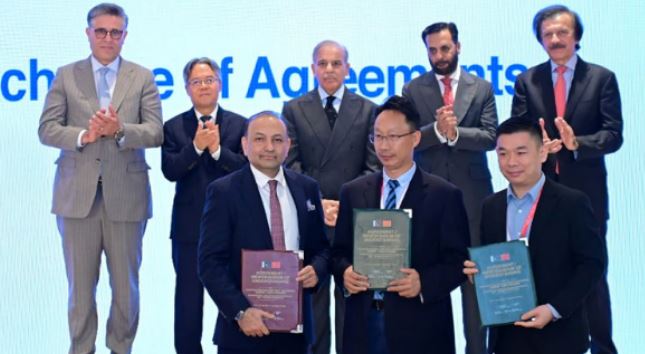
Earlier, the prime minister witnessed the formal exchange of the nine agreements valued at $440 million between Pakistani and Chinese pharmaceutical companies.
Addressing the conference, Health Minister Syed Mustafa Kamal said the event reflected Prime Minister Shehbaz Sharif’s vision of expanding economic cooperation with China. He said weeks of planning and consultations had resulted in productive business engagements between companies from both countries.
He also acknowledged the important role played by Pakistan’s ambassador in Beijing in making the initiative successful.
Mustafa Kamal said Pakistan and China have enormous untapped potential for collaboration in healthcare and other sectors.
He added that the government is taking steps to improve public access to quality healthcare services while expressing gratitude to Chinese pharmaceutical companies for their confidence in Pakistan’s market.
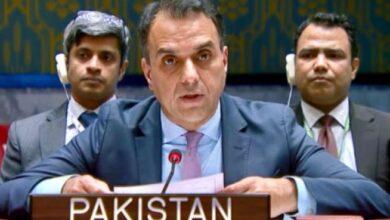
Chinese Ambassador Jiang Zaidong said Pakistan’s growing population had significantly increased demand for healthcare services, making the country’s pharmaceutical industry an attractive destination for investment.
He noted that the Chinese Embassy had actively facilitated contacts between businesses from both countries to encourage stronger commercial partnerships.
The ambassador also praised Pakistan’s improving economic indicators under Prime Minister Shehbaz Sharif’s leadership and appreciated the country’s constructive role in recent regional developments.
He expressed confidence that Pakistan would continue providing a stable and secure environment for Chinese businesses while supporting further investment.
Special Assistant to the Prime Minister on Industries and Production Haroon Akhtar Khan said Pakistan is implementing an innovation-driven industrial strategy focused on technology transfer, industrial modernisation, and improving international competitiveness.
He said the prime minister’s recent visit to China had created new opportunities for economic cooperation and paved the way for broader industrial collaboration between the two countries.
Haroon Akhtar added that pharmaceuticals, biotechnology, and vaccine manufacturing have been identified among Pakistan’s priority sectors.
He said the government is introducing reforms to simplify business procedures, reduce bureaucratic barriers, and create a more investment-friendly environment.
He invited Chinese companies to expand cooperation with Pakistan in research, manufacturing, and exports, saying stronger industrial partnerships could enable both countries to jointly supply pharmaceutical products to regional and global markets.