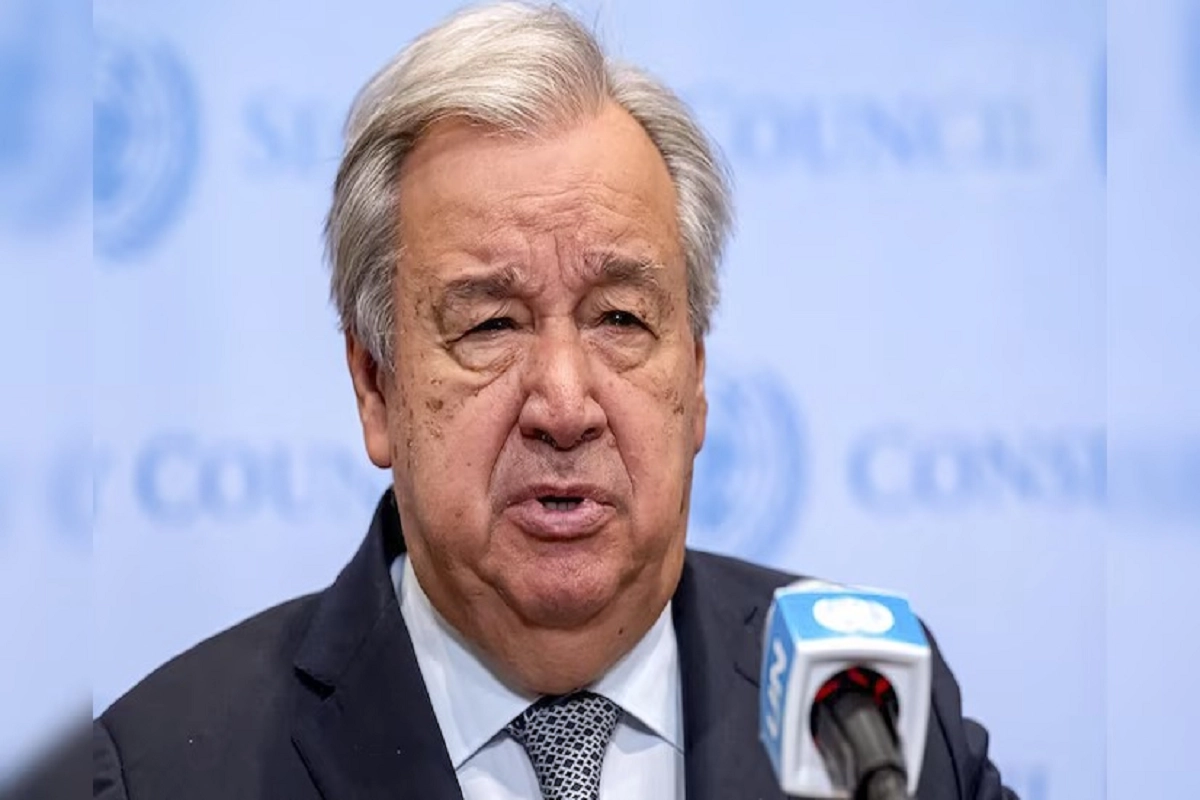
UNITED NATIONS: UN Secretary-General Antonio Guterres on Sunday condemned the US military strikes on Iran’s nuclear facilities as a “dangerous escalation” and a “direct threat to international peace and security,” urging immediate de-escalation amid global concern that the conflict may spiral out of control.
“I am gravely alarmed by the use of force by the United States against Iran today,” Guterres said in a statement. “There is a growing risk that this conflict could rapidly get out of control — with catastrophic consequences for civilians, the region, and the world.”
Guterres appealed to all UN member states to uphold the Charter and engage in diplomacy. “At this perilous hour, it is critical to avoid a spiral of chaos. There is no military solution. The only path forward is diplomacy. The only hope is peace,” he added.
The US strikes, ordered by President Donald Trump, targeted Iran’s key nuclear sites at Fordow, Isfahan and Natanz. Iran confirmed the attacks but vowed its nuclear work would continue. Israel’s Prime Minister Benjamin Netanyahu praised the US action, calling it “a historic moment” and thanking Trump for “doing what no other country on earth could do.”
However, many nations reacted with alarm and called for calm:
Iraq warned the attacks could jeopardize Middle Eastern stability. Government spokesperson Basim Alawadi said, “This military escalation constitutes a grave threat to peace and security in the Middle East.”
New Zealand’s Foreign Minister Winston Peters urged a return to talks and warned against “critical further escalation,” calling the crisis “the most serious I’ve ever dealt with.”
China’s state broadcaster CGTN criticized the strikes, asking if the US was repeating its “Iraq mistake” and warning of “unintended consequences” from military action in the region.
Japan’s Prime Minister Shigeru Ishiba convened a high-level meeting to assess regional impact, while newspapers issued extra editions on the attack.
South Korea called an emergency meeting to assess risks to national security and the economy.
Australia, which closed its Tehran embassy and evacuated diplomats before the strikes, emphasized that “the security situation in the region is highly volatile” and called again for “dialogue and diplomacy.”
Meanwhile, US domestic response was deeply divided.
Republican leaders, including Senators Lindsey Graham and John Cornyn, backed Trump’s decision as “correct” and “courageous.” House Speaker Mike Johnson said the strikes proved Trump “means what he says.” Senate Majority Leader John Thune added he stood with the president “to ensure a nuclear weapon remains out of reach for Iran.”
Democratic reactions varied. While most raised concerns about presidential overreach and called for Congressional approval, a few, like pro-Israel Senator John Fetterman of Pennsylvania, supported the move. “Iran is the world’s leading sponsor of terrorism and cannot have nuclear capabilities,” he said.
However, critics, including Republican Congressman Thomas Massie and several Democrats, said the strike bypassed constitutional checks. “This is not Constitutional,” Massie posted, while Democrat Jim Himes stressed, “My attention to this matter comes BEFORE bombs fall. Full stop.”
The Senate is expected to vote soon on a resolution requiring congressional authorization for military action against Iran, authored by Senator Tim Kaine.
As tensions mount, the global diplomatic community is bracing for potential fallout, with many fearing that the conflict, if left unchecked, could engulf the region and extend far beyond.