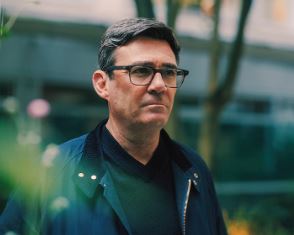
London : Andy Burnham officially became the United Kingdom’s new prime minister on Monday after King Charles III accepted Keir Starmer’s resignation and invited the Labour leader to form a new government, Buckingham Palace announced.
In a statement, the palace confirmed that Burnham accepted the King’s invitation to become prime minister and was formally asked to establish the next government.
Delivering his first speech outside 10 Downing Street, Burnham pledged to introduce immediate measures this week to help ease the cost-of-living burden on households. He also announced plans to unveil a long-term 10-year national strategy later this year aimed at restoring stability and driving economic growth.
“Britain needs to show the world that we can regain our stability once again,” Burnham said, acknowledging that the country must improve after years of political and economic uncertainty.
Supporters gathered outside Downing Street welcomed the new prime minister with loud cheers and applause as he addressed the nation for the first time.
Burnham becomes the sixth person to serve as Britain’s prime minister in the last decade. He inherits office at a time when the country is facing multiple economic and political challenges, leaving little room for delay in delivering results.
He succeeds Keir Starmer, who stepped down after just two years in office despite leading Labour to a landslide election victory that ended 14 years of Conservative rule.
In an interview with The Times published before taking office, Burnham said Britain needed a fresh approach to government after years of political instability.
“What we’ve been doing hasn’t been working,” he said. “I am going to try and do things in a different way.”
Attention has now shifted to the formation of Burnham’s Cabinet, with an announcement expected on who will succeed Rachel Reeves as the country’s finance minister.
The former mayor of Greater Manchester, widely known as the “King of the North,” was chosen by the Labour Party after Starmer announced his resignation last month. Many Labour lawmakers believe Burnham is the party’s strongest option to counter the growing popularity of Nigel Farage’s Reform UK party.
Before leaving Downing Street, Keir Starmer defended his government’s record, saying his administration had made Britain stronger and fairer during its two years in office.
“I go with good grace, I go with a smile, and I go proud of everything that we have achieved,” Starmer said in his farewell address.
Soon after Burnham’s appointment was confirmed, world leaders began sending congratulatory messages.
European Commission President Ursula von der Leyen said she looked forward to working closely with the new British prime minister to strengthen cooperation between the European Union and the United Kingdom for the benefit of both sides.
European Council President Antonio Costa also welcomed the appointment, expressing hope that the positive momentum in EU-UK relations would continue under Burnham’s leadership.
Deputy Labour leader Lucy Powell said Burnham’s years as mayor of Greater Manchester had given him practical experience outside Westminster and prepared him to deliver the bold reforms Labour promised voters.
The new prime minister now faces major challenges, including sluggish economic growth, rising government borrowing costs, increasing welfare spending, and continued illegal migration across the English Channel. His government must also deal with global economic uncertainty, volatile energy prices linked to the US-Iran conflict, and changing international conditions.
Burnham said his government would adopt a different economic strategy by prioritising early investment and preventive measures rather than paying for long-term policy failures. He also promised swift action to help families struggling with rising living costs.
Starmer announced his resignation in late June following political setbacks, policy reversals, and a series of controversies that weakened his leadership.
Having returned to Parliament only weeks ago, Burnham now takes office with limited fiscal flexibility because of slow economic growth, rising public debt, and strict government spending rules.
Burnham previously served as a Labour MP from 2001 to 2017 and held ministerial positions under former prime ministers Tony Blair and Gordon Brown. During his time as Mayor of Greater Manchester, he built a reputation as a pragmatic and approachable politician with a strong public profile.
With the next general election expected in 2029, Burnham has less than three years to revive Labour’s popularity amid opinion polls showing growing support for Reform UK.
Speaking to Labour supporters last week, Burnham described the leadership transition as the party’s “last chance” to restore public confidence.
His first major policy move came even before formally taking office, when he scrapped the previous government’s nationwide digital identity programme, estimated to cost £1.8 billion over three years. The government said the funds would instead be redirected toward priorities such as helping households cope with the rising cost of living.