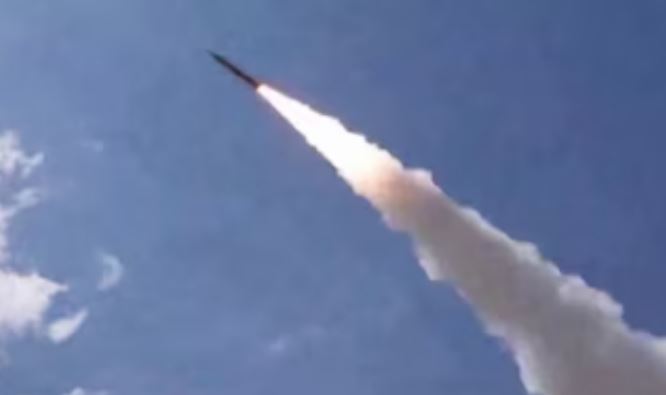
Amman (Web Desk/Agencies): Iran has claimed responsibility for missile attacks targeting US military facilities in Jordan, saying the strikes were carried out in response to a recent American attack on Iranian territory.
The Islamic Revolutionary Guard Corps (IRGC) said it launched ballistic missiles at two US military bases in Jordan and claimed the attacks inflicted significant damage. Jordanian authorities, however, said their forces intercepted eight missiles but did not identify their point of origin.
The exchange followed a US military operation announced a day earlier. Washington said its forces had targeted Iranian rocket launchers on Larak Island in the Strait of Hormuz, in an effort to prevent Iran from laying additional sea mines in the strategically important waterway.
US Central Command said the operation involved limited and targeted action against IRGC units allegedly preparing to deploy mines in the Strait of Hormuz.
Iran condemned the US operation, with the IRGC describing it as an act of aggression. Iranian officials said the subsequent strikes on American positions were conducted in what Tehran termed legitimate self-defence.
Iran’s Foreign Ministry said some US facilities in Jordan had allegedly been used to support military operations against Larak Island. Tehran warned that any further attacks would draw a strong response and said Washington and countries supporting its military campaign would be responsible for any further escalation.
Separately, Iranian state media reported an IRGC claim that a drone operation had been carried out against the UAE’s Al Minhad Air Base, where US personnel and military helicopters were reportedly among the intended targets.
The United Arab Emirates rejected the claim. Its defence authorities said an Iranian drone had been intercepted over UAE territorial waters and dismissed reports of a missile attack on the airbase as false.
The latest confrontation comes as the US-Iran conflict enters its sixth month. While the intensity of fighting had declined in recent weeks, tensions have remained particularly high around the Strait of Hormuz, a vital international route for global energy shipments.
Iran has effectively restricted normal maritime traffic through the waterway. Before the conflict began with US and Israeli strikes on Iran on February 28, the Strait of Hormuz was used for the transportation of roughly one-fifth of global oil supplies.
At the same time, Washington has increasingly relied on economic measures against Tehran. US Treasury Secretary Scott Bessent has indicated that the Trump administration plans to expand secondary sanctions, with financial institutions among the initial targets.
The United States recently imposed sanctions on UAE branches of Egypt’s Banque Misr, alleging financial links to Iran. Bessent also warned that Washington could take further steps against institutions that facilitate Iranian financial activity.
Several countries, including Pakistan and Qatar, have been involved in diplomatic efforts aimed at ending the conflict and securing a lasting settlement.
An April ceasefire brought an end to the most intense phase of the fighting, while a memorandum of understanding signed in June was intended to pave the way for a broader peace arrangement. However, a comprehensive agreement has yet to be reached, and sporadic attacks have continued.
The US military said its previous strike against Iran before Sunday’s operation occurred on July 29, following what it described as an attempted surprise attack on American forces in the region.
Earlier in July, US Central Command also conducted military operations against Iran for 13 consecutive nights.
Iran has repeatedly retaliated during the conflict by targeting US facilities and positions linked to American allies in the Gulf, with reported incidents involving locations in Kuwait, Oman, Saudi Arabia and the UAE.
The disruption around the Strait of Hormuz has also affected global energy markets. Concerns over the security of oil shipments have contributed to higher crude prices, with Brent crude rising above $90 a barrel and US West Texas Intermediate (WTI) moving beyond $85 following reports of the latest strikes.
The conflict has also generated political debate in the United States ahead of the November midterm elections.
US Senator Jack Reed, the top Democrat on the Senate Armed Services Committee, criticised President Donald Trump’s handling of the conflict, arguing that the campaign had failed to achieve its stated objectives and had weakened Washington’s position internationally.