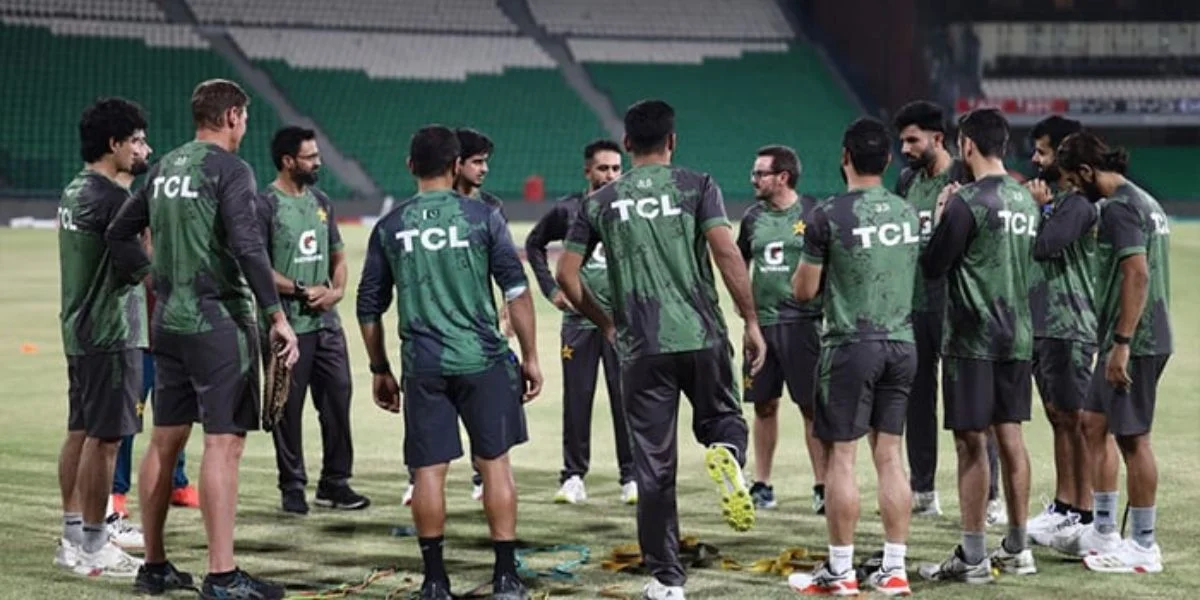
ISLAMABAD: With the ICC T20 World Cup scheduled for next year in India and Sri Lanka, Pakistan and Bangladesh are gearing up for the tournament by focusing on building new squads and refining their playing styles. Pakistan, the 2009 world champions, and Bangladesh, ranked ninth in T20Is, are both aiming to improve their performances in a three-match T20 international series starting Wednesday in Lahore.
Pakistan’s Rebuild Under Mike Hesson
Pakistan has faced a challenging period, suffering early elimination from the 2024 World Cup and winning only three of their last 13 T20 internationals.
In response, new head coach Mike Hesson, a former New Zealand coach, has started restructuring the team by emphasizing a fresh style of play and selecting younger talent.
Key players like Babar Azam, Mohammad Rizwan, and Shaheen Shah Afridi have been dropped as Hesson looks to develop squad depth and focus on a long-term strategy.
Hesson said, “We’ve been really clear around the style of play we want and then it’s about picking players that can do that.
We will develop a depth of squad playing the way we want and the rankings will come in time.” Salman Agha now leads the side, which is still adapting after a tough 4-1 series defeat in New Zealand.
Bangladesh’s Challenges and Aspirations
Bangladesh is also rebuilding under new West Indian coach Phil Simmons, who took charge in October. The team is missing several senior players, including Tamim Iqbal and Shakib Al Hasan, due to retirement or absence from T20Is.
Injuries to frontline fast bowlers Taskin Ahmed and Mustafizur Rahman, along with the withdrawal of rising star Nahid Rana over security concerns related to the recent India-Pakistan conflict, have added to their challenges.
Despite these setbacks, Simmons remains optimistic: “We’re aiming to improve our cricket by performing well in this series.”
The original five-match series was reduced to three due to security issues, but both teams are eager to use the matches as preparation for the World Cup.
With less than a year to go, Pakistan and Bangladesh see these games as a vital step towards building competitive, resilient teams capable of making a mark on the global stage.