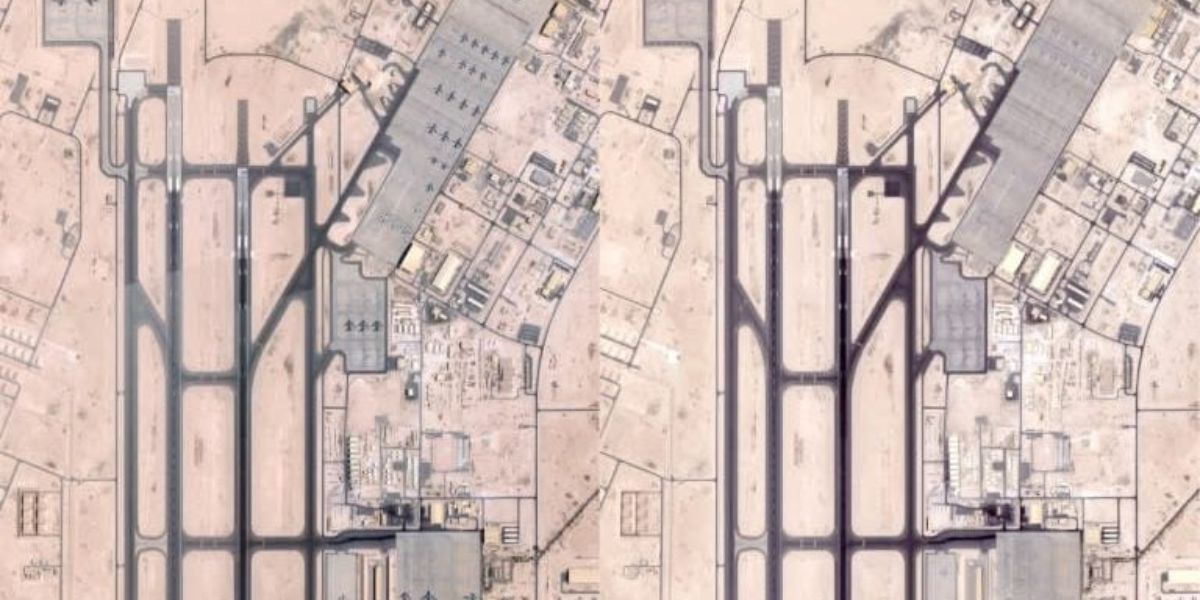
WASHINGTON: Nearly 40 US military aircraft are no longer visible at Qatar’s Al Udeid Air Base, according to satellite images released by Planet Labs and analyzed by AFP, suggesting a strategic repositioning as the United States weighs joining Israeli military operations against Iran.
Satellite imagery from June 5 showed dozens of US aircraft — including C-130 transport planes and reconnaissance aircraft — stationed on the base’s tarmac. But by June 19, only three aircraft remained visible, raising speculation that the rest were either relocated to other regional bases or moved into protective hangars.
The shift comes amid rising fears of Iranian retaliation on US forces if Washington formally backs Israeli strikes. The White House confirmed that President Donald Trump is expected to make a final decision within two weeks.
In a statement Thursday, the US embassy in Qatar cited “ongoing regional hostilities” and announced restricted access to Al Udeid, advising personnel to maintain heightened vigilance.
Experts warn that the base’s geographic location, just across the Gulf from Iran, makes it especially vulnerable. Former US Army Lieutenant General Mark Schwartz noted that even limited strikes or shrapnel could disable vital aircraft. “You want to reduce risk to US forces — both personnel and equipment,” he said.
While the Pentagon declined to confirm specific aircraft movements, a defense official emphasized operational security and readiness, saying US forces remain “highly capable and prepared.”
Since Israel began its offensive against Iran, the US military has increased regional activity, deploying an additional aircraft carrier and redirecting key support assets. Between June 15 and 18, open-source flight data revealed the movement of at least 27 US refueling aircraft — including KC-46A Pegasus and KC-135 Stratotankers — from the US to Europe. By late Wednesday, 25 remained stationed in Europe.
With tensions climbing and both diplomatic and military options narrowing, the repositioning signals Washington’s urgent effort to protect forces while preserving strategic flexibility in one of the world’s most volatile theatres.