
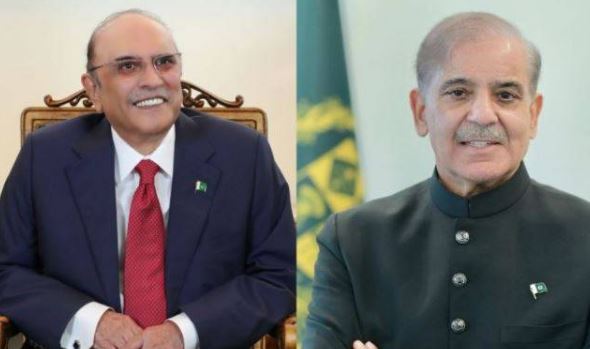
Islamabad: President Asif Ali Zardari and Prime Minister Shehbaz Sharif on Saturday reiterated Pakistan’s resolve to pursue responsible population planning, emphasising that empowering the country’s youth and increasing investment in education and healthcare are vital for sustainable national progress.
In his World Population Day message, President Zardari called on government bodies, parliamentarians, educational institutions, civil society, development partners, religious scholars, media organisations and local communities to work together to improve the wellbeing, health and empowerment of the people.
Highlighting this year’s theme, “Realising the Hopes and Aspirations of Young People – Today and for the Future,” the president said Pakistan’s future depends on prioritising women, children and young people in its development policies. He said such an approach would pave the way for a more inclusive, equitable and sustainable society.
He said the occasion provides an opportunity for Pakistan to join the global community in reviewing demographic trends while renewing its commitment to ensuring dignity, quality healthcare and equal opportunities for every citizen.
Describing the country’s young population as one of its greatest assets, President Zardari noted that more than 65 per cent of Pakistan’s population is under the age of 30.
He said this demographic strength could significantly boost economic growth, innovation and social development if young people are provided with quality education, accessible healthcare, market-oriented skills and meaningful employment. Investing in the youth, he added, is crucial to securing the nation’s future.
The president also stressed the need to improve the health of women and children, saying maternal healthcare, child survival, proper nutrition, education and access to essential medical services are key pillars of sustainable development.
He observed that lasting national progress cannot be achieved if women continue to face avoidable health risks during pregnancy and childbirth, children suffer from malnutrition or girls are deprived of education and equal opportunities.
Paying tribute to Shaheed Mohtarma Benazir Bhutto, President Zardari said her dedication to promoting women’s rights, education, dignity and reproductive healthcare established the foundation for inclusive development, adding that her vision continues to guide efforts to strengthen women’s role in society.
He further said that population trends are closely linked with national development, explaining that improvements in education, healthcare, gender equality, poverty reduction and economic opportunities strengthen families, build resilient communities and contribute to long-term prosperity.
The president described access to quality healthcare for every woman and proper nutrition, education and care for every child as both a national responsibility and a moral obligation.
He urged the nation to reaffirm its commitment to building a Pakistan where every citizen has the opportunity to realise their potential while transforming the country’s demographic strength into lasting economic and human development.
In a separate message, Prime Minister Shehbaz Sharif underscored the importance of addressing Pakistan’s rapidly increasing population and reaffirmed the government’s commitment to responsible population management for a more balanced and prosperous future.
Referring to Pakistan’s annual population growth rate of 2.55 per cent, the prime minister urged all stakeholders to recognise population growth as a major national challenge that requires immediate and coordinated action.
He noted that the country’s expanding population has intensified pressure on the economy, healthcare, education, natural resources and other critical sectors.
To tackle the issue, the government has recently established a high-level committee that includes the army chief among its members.
Prime Minister Shehbaz called on federal and provincial governments, lawmakers, development agencies, civil society, academics, the private sector, religious leaders, the media and local communities to contribute towards addressing population-related issues.
He emphasised that informed decision-making, responsible parenthood, gender equality and sustainable development are essential, adding that collective action from every segment of society is key to effectively managing population growth and ensuring a stronger future for Pakistan.
