
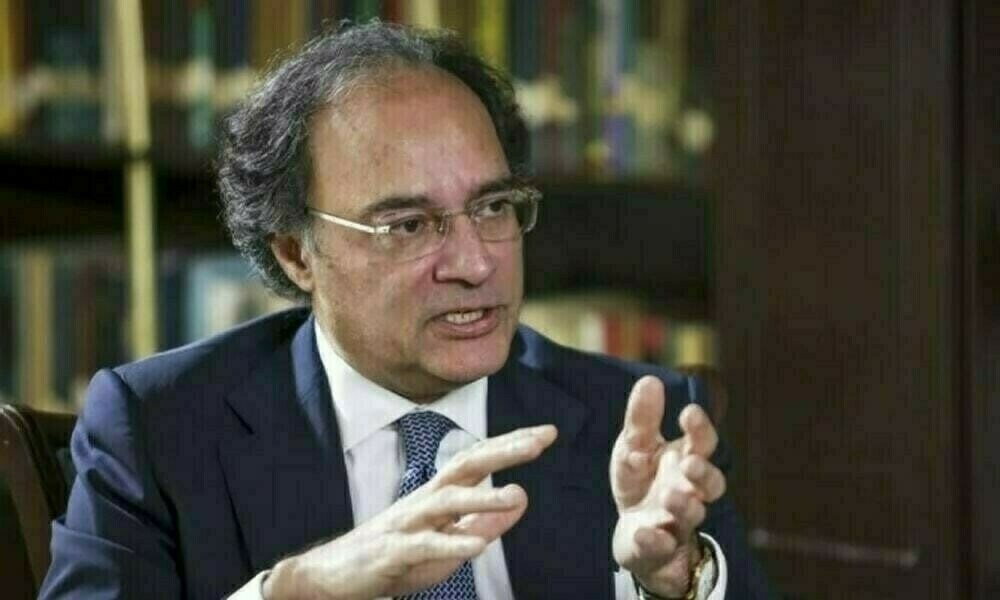
ISLAMABAD: Finance Minister Muhammad Aurangzeb on Wednesday emphasized that tariff reforms are essential for building an export-led economy, while defending the federal budget for FY2025-26 in a press conference overshadowed by a journalist walkout.
The finance minister stated that while fiscal consolidation remains a priority under the IMF framework, the government has still provided targeted relief to the salaried class and incentives for sectors like real estate and construction.
Journalists, upset over the lack of a technical briefing from the Federal Board of Revenue (FBR) on the Finance Bill 2025, exited the press conference early in protest.
Tariff Adjustments Aim to Help Exporters
Aurangzeb highlighted major changes under the National Tariff Policy, explaining that additional customs duties were eliminated on four key lines and reduced across 2,700 tariff lines.
These adjustments, he said, are directly linked to raw materials used by exporters and will help stimulate exports.
He described this move as the beginning of a broader structural overhaul planned for the upcoming fiscal year.
He also defended the government’s decision to benchmark salaries and pensions with inflation, asserting that such an approach is standard globally.
Despite limited fiscal space, Aurangzeb said the government tried to provide relief wherever possible, including a 0.5% cut in super tax for mid-sized companies.
Focus on Revenue, Enforcement, and Agriculture
Regarding revenue generation, Aurangzeb disclosed that Rs312 billion in new taxes are expected to help meet the FBR’s Rs2.2 trillion additional revenue target.
He stressed that enforcement—not just new taxes—will be key, noting that recent enforcement efforts alone generated Rs400 billion.
He urged Parliament to support enabling legislation for long-term reform.
On agriculture, the minister revealed that an initially planned tax on fertilisers and pesticides was dropped after negotiations with the IMF, recognizing their importance as critical inputs for farmers.
He also called for increased financing for small farmers and a reduction in the role of intermediaries.
Aurangzeb acknowledged that public expenditures had been a concern, but said they increased only 1.9% this year.
Subsidies and debt servicing were reduced, although certain key development and defense expenditures grew.
He emphasized that continued borrowing to finance deficits is unsustainable and reforms are necessary.
Other Key Remarks
Aurangzeb clarified that salary hikes for National Assembly and Senate leaders came after a nine-year gap.
On NFC-related questions, he reassured that all decisions will be made in full consultation with provinces.
Concluding, the finance minister admitted that reversing long-standing economic imbalances would take time, but asserted that recent budget steps signal the government’s commitment to reform.
He acknowledged the burden on the formal sector and salaried class and said the government must show it is serious about change.
