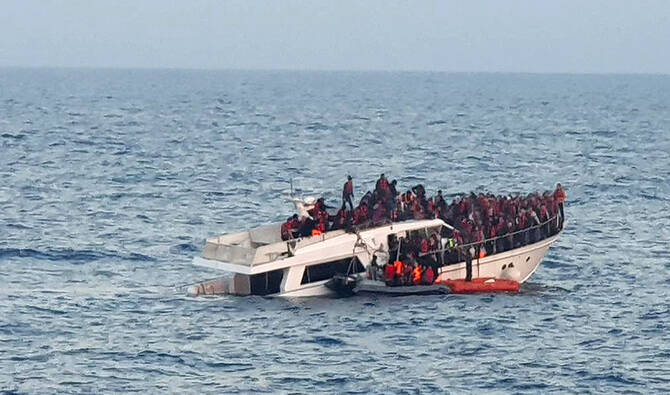
ISLAMABAD: At least 60 migrants, including several Pakistanis, are feared dead after two tragic shipwrecks off Libya’s coast this past week, the International Organisation for Migration (IOM) confirmed on Tuesday.
The first vessel sank on June 12 near Tripoli, where 21 people — including women and children — went missing, with only five survivors pulled from the sea.
The second incident occurred about 35 kilometers off Tobruk, where a lone survivor reported that 39 others aboard had drowned.
Victims included nationals from Pakistan, Eritrea, Egypt, and Sudan, adding to the alarming toll of lives lost on the world’s deadliest migration route.
IOM Calls for Urgent Rescue Measures
Othman Belbeisi, IOM’s regional director for the Middle East and North Africa, urged the international community to boost rescue efforts and ensure safe landing points for survivors.
The agency stressed that the Mediterranean route is becoming more perilous due to smugglers’ dangerous tactics, limited rescue options, and growing restrictions on humanitarian operations.
According to the IOM, at least 743 migrants have died attempting the Mediterranean crossing in 2025 alone.
UNHCR data also shows a 15% increase in landings on Italy’s coast compared to last year, with Libya remaining a major departure point.
Over 28,000 Dead Since 2015 in Mediterranean Crossings
Maritime rescue groups revealed that more than 175,000 people have been saved from the Mediterranean over the last 10 years.
However, they estimate that at least 28,932 people have died since 2015, with many cases likely unrecorded.
German NGO SOS Humanity stated that in the central Mediterranean — between Libya, Tunisia, Italy, and Malta — six people die daily, including children.
Ten of the 21 rescue NGOs operating in the area are German, but many face restrictions under new laws, particularly from Italy’s hard-right government.
Italian Prime Minister Giorgia Meloni’s administration has imposed strict regulations, requiring ships to dock at specific ports, which NGOs argue violates maritime law.
Rescue groups say they are under growing pressure and face a lack of support from European governments, especially Germany.