Islamabad: Federal Minister for Information and Broadcasting Attaullah Tarar on Friday said Pakistan’s achievements during “Operation Bunyan-un-Marsoos” had strengthened the country’s global standing and become a defining chapter in its history.
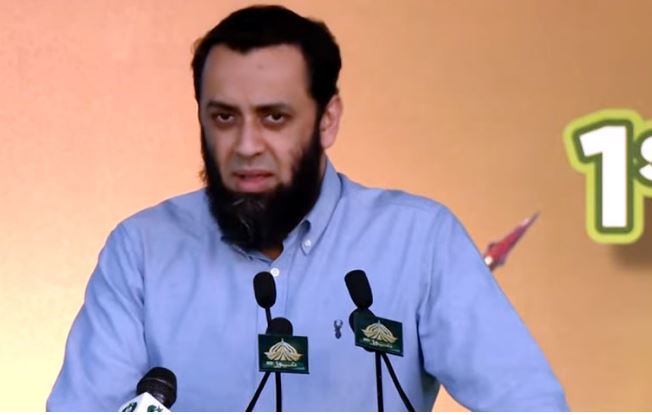
Addressing a ceremony held to mark the first anniversary of Marka-e-Haq, he said May marked one year since what he described as a historic and God-given triumph for the nation.
He noted that the enthusiasm and spirit displayed by students at the event reflected that Pakistan’s future was in capable and secure hands.
Tarar said Pakistan was a priceless blessing attained through the immense sacrifices of Muslims of the subcontinent. He added that the vision presented by Allama Muhammad Iqbal was realized under the leadership of Muhammad Ali Jinnah, resulting in the establishment of an independent homeland.
Speaking about regional tensions, the minister said hostile elements had never wholeheartedly accepted Pakistan’s existence and had continuously plotted against the country. Referring to the Pahalgam incident, which he termed a “false flag operation,” he said Pakistan had maintained a transparent position and even offered an impartial international investigation.
He claimed that while Pakistan remained actively engaged in the fight against terrorism, India was involved in supporting such activities, adding that the international community was increasingly recognizing the difference.
Discussing the country’s leadership during the conflict, Tarar said Prime Minister Shehbaz Sharif played a key role by demanding an inquiry into the Pahalgam incident, while Field Marshal Syed Asim Munir directed defence operations. He further alleged that eight Indian aircraft were shot down during the confrontation.
The minister said Pakistan’s retaliatory action, including Fateh missile strikes targeting Indian defence sites, quickly changed the course of events and forced Indian authorities to seek de-escalation within hours.
Criticizing Indian media coverage, he accused it of spreading fabricated reports, including claims about the destruction of the so-called “Port of Lahore” and “Port of Multan,” which he said were later exposed internationally as false.
Tarar stated that Pakistan secured victories on diplomatic, media, and military fronts, describing it as a landmark achievement that would be remembered for generations. He added that the success highlighted the unity between the Pakistani people and the armed forces, who stood together like an “Iron Wall” under the spirit of Bunyan-un-Marsoos.
He emphasized that national unity remained a major factor behind the success. Federal Information Secretary Ashfaq Ahmed Khalil also attended the ceremony.
Later, the minister joined students in a candlelight vigil held in memory of the martyrs of Operation Bunyan-un-Marsoos and paid tribute to their sacrifices.