Islamabad : Prime Minister Shehbaz Sharif has directed provincial authorities to take immediate and strict legal action against those responsible for hoarding petroleum products and creating artificial shortages.
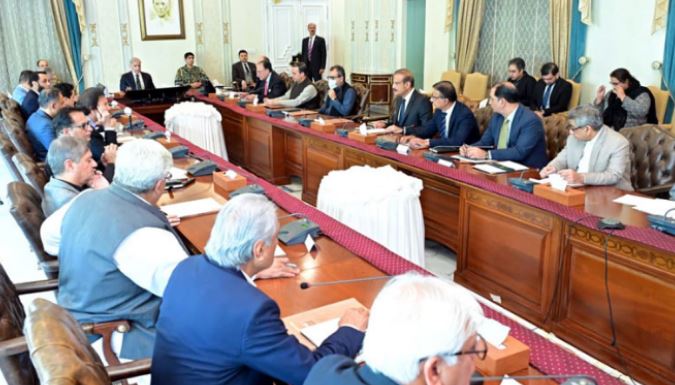
The premier issued these orders while chairing a high-level meeting on petroleum supply in Islamabad, emphasizing that any petrol station found hoarding fuel should be shut down instantly.
He also instructed the Oil and Gas Regulatory Authority (OGRA) to cancel licenses of such outlets and initiate legal proceedings against violators.
PM Shehbaz tasked the petroleum minister with visiting the provinces to coordinate with local authorities in devising a comprehensive plan to conserve petroleum resources while maintaining uninterrupted supply to the public.
A real-time monitoring dashboard will be established to track fuel distribution and transportation across the country, providing authorities with continuous oversight and ensuring smooth supply chains.
During the meeting, officials briefed the prime minister on the nation’s petroleum reserves, assuring him that current stock levels are adequate to meet national demand amid evolving regional dynamics.
The session was attended by federal ministers, chief secretaries of all four provinces, representatives from Azad Jammu and Kashmir (AJK) and Gilgit-Baltistan, along with the State Bank of Pakistan (SBP) governor and special assistants to the prime minister.
Additionally, a high-powered committee’s recommendations for determining weekly petroleum pricing received the prime minister’s approval. After clearance from the Economic Coordination Committee (ECC), the proposals will be submitted to the federal cabinet for final approval.
The prime minister also directed authorities to develop contingency plans for remote work arrangements in educational institutions and offices. The finance minister has been tasked with consulting provincial governments and presenting a detailed plan.