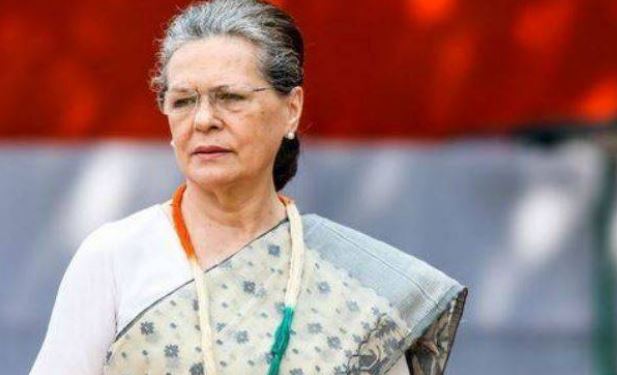
New Delhi : Senior Indian Congress leader and former party president Sonia Gandhi has sharply condemned the Modi-led government, accusing it of abandoning India’s long-standing policy of maintaining a balanced approach between Israel and Iran. She argued that the government now favors Israel while neglecting strategic ties with Tehran.
In an opinion piece published in an Indian newspaper, Gandhi criticized the government’s “inaction and silence” following the targeted killing of Iran’s Supreme Leader Ayatollah Ali Khamenei in coordinated strikes carried out by the United States and Israel. She described this lack of response not as neutrality, but as a “dereliction of duty” and a serious deviation from India’s traditional diplomatic stance in West Asia.
Gandhi emphasized that India’s foreign policy had historically aimed to maintain equilibrium between Israel and Iran, grounded in centuries-old cultural links and strategic interests. She highlighted Tehran’s role as a key partner in regional projects such as the Chabahar Port and the Zahedan connectivity project, which have bolstered India’s trade and regional access.
“By focusing on high-profile visits to Israel without a matching engagement with Iran, and now remaining silent over the assassination of a sitting head of state, the government has undermined decades of careful diplomacy,” Gandhi wrote.
She also criticized the government for prioritizing political optics, defense deals with Israel, and alignment with Western powers over India’s national interests and ethical responsibilities. According to Gandhi, official statements largely condemned Iran’s retaliatory measures while giving little attention to the initial unprovoked strikes, raising questions about India’s credibility on the global stage.
Gandhi described this approach as “moral cowardice,” noting that it risks isolating India among Global South nations and BRICS partners such as Russia and China, who have favored measured responses emphasizing sovereignty and conflict de-escalation.
She posed a critical question about India’s global role: if the country hesitates to uphold international norms and sovereignty now, how can other nations in the Global South rely on India to defend these principles in the future?
Concluding her article, Gandhi urged that when Parliament resumes the second part of the Budget session, lawmakers should openly debate the government’s “disturbing silence” on international diplomacy and the apparent erosion of balanced foreign policy, without attempts at evasion.