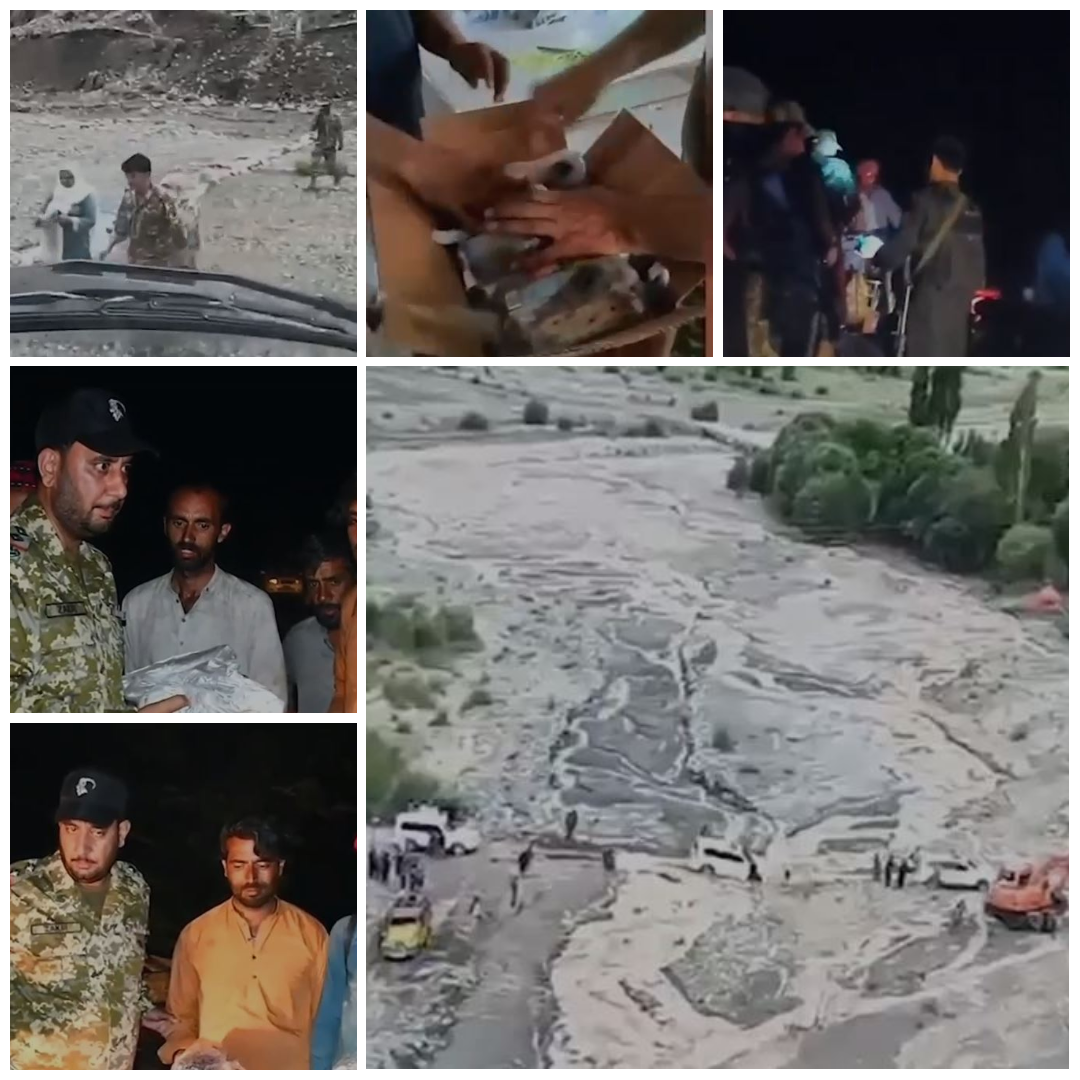
Gilgit/Naran: Torrential rains and sudden flash floods have caused severe disruption along Babusar Road and the Karakoram Highway, leaving scores of tourists and commuters stranded.The Pakistan Army, along with Gilgit-Baltistan Scouts, has initiated extensive rescue and relief operations amid the crisis.”
According to military officials, 15 helicopter sorties have been carried out so far, successfully evacuating stranded individuals to safe zones. Relief supplies, including food, drinking water, and first aid, are being delivered to affected areas, with medical teams treating the injured on site.
Engineering teams from the military are engaged in continuous operations, deploying heavy equipment to clear debris and reopen obstructed routes.”. Search and rescue teams have also been deployed to locate missing persons in remote and mountainous areas.
The swift and coordinated response by military and rescue units has helped prevent major casualties. Relief operations are ongoing, with civil and military institutions working in close coordination.
Authorities have advised the public to avoid traveling to the flood-affected areas to ensure rescue efforts continue without interruption.