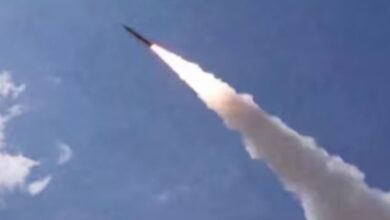
Tehran (Web Desk/Agencies): Iran’s Islamic Revolutionary Guard Corps announced on Saturday that it had launched an initial round of missile and drone strikes targeting Israel, warning that all United States military facilities and assets in the region are within Tehran’s reach, according to an Iranian official speaking to international media.
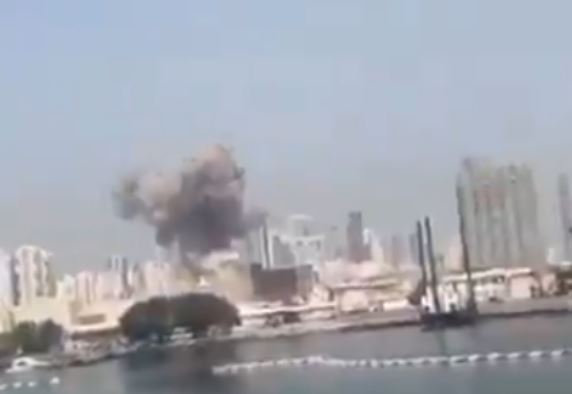
Explosions were reported across several Gulf countries, including Kuwait, the United Arab Emirates, Bahrain, and Qatar. Bahrain confirmed that one missile struck the US Fifth Fleet service center, producing thick smoke visible along the coast and triggering alarms.
In Abu Dhabi, residents reported multiple blasts in areas including the Corniche, Al Dhafra, and Bateen districts. Witnesses described rapid detonations that shook windows, with authorities confirming one fatality caused by falling debris. In Qatar, officials stated that incoming missiles were intercepted by Patriot defense systems protecting the Al-Udeid Air Base, the region’s largest US military base.
In Israel, air raid sirens sounded over Jerusalem following earlier US-Israeli strikes on Iranian territory. Israeli forces reported detecting missiles fired from Iran, with explosions also noted near Kharg Island, a vital passage for nearly 90% of Iran’s oil exports through the Strait of Hormuz.
Iranian state media reported blasts in cities including Isfahan, Qom, Karaj, Kermanshah, and Tabriz, with officials indicating that key government targets were struck in the initial wave.
The retaliatory attacks represent a significant escalation in Middle Eastern tensions, reducing prospects for a diplomatic resolution to the ongoing US-Iran dispute over nuclear activities. Tehran has consistently denied pursuing nuclear weapons, while Israel insists that any negotiations must address both Iran’s nuclear and missile programs.
Iranian authorities confirmed that Supreme Leader Ayatollah Khamenei has been moved to a secure location, and the President remains safe. US officials reported that air and naval operations are ongoing, targeting only military installations.
Prior to the strikes, Iranian leadership had warned of a “crushing” response. Israel Katz described the Israeli operation as a pre-emptive measure to neutralize threats against Israel, emphasizing that the mission had been planned months earlier and coordinated with the United States, which has prepared several days of military activity against Iran.
Telecommunications in Iran were disrupted, with mobile networks and internet services affected, particularly in Tehran, where NetBlocks reported a near-total media blackout.
In response, Israel closed schools and workplaces except for essential services, restricted public airspace, and advised citizens to avoid airports. Israeli military forces remain deployed, with additional strikes on Iran expected as necessary.
The current escalation follows a 12-day air campaign between Israel and Iran in June, coinciding with renewed US-Iran talks earlier this year aimed at a diplomatic resolution to nuclear disagreements. Tehran has expressed willingness to discuss limitations on its nuclear program in exchange for sanctions relief but has refused to link such negotiations to its missile program.
In June, Iran had previously retaliated against US actions by launching missiles at Al-Udeid Air Base.