Islamabad : Prime Minister Shehbaz Sharif has reiterated Pakistan’s resolve to deepen cooperation with the European Union (EU) across a wide range of areas, including trade, investment, climate action, security, migration, sustainable development, and regional connectivity.
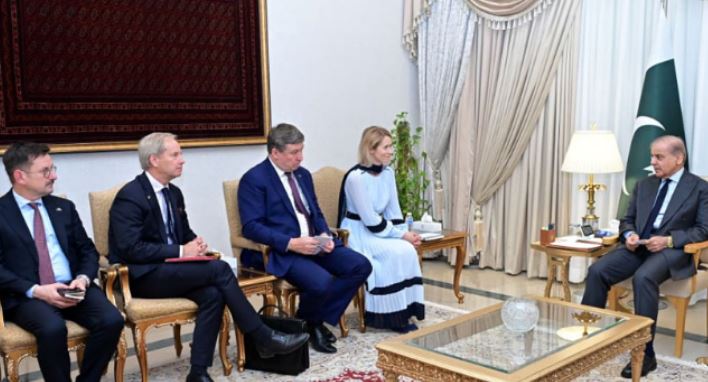
He expressed these views during a meeting in Islamabad with the European Union’s High Representative for Foreign Affairs and Security Policy and Vice-President of the European Commission, Kaja Kallas.
The Prime Minister underlined that the GSP+ framework remains a key pillar in strengthening and sustaining trade ties between Pakistan and the European Union. He noted that Pakistan values its broad-based and evolving partnership with the EU and is keen to further expand and enhance it.
Both sides also exchanged perspectives on regional and global developments. Prime Minister Shehbaz Sharif appreciated the European Union’s role in supporting Pakistan’s efforts to promote peace and stability in the Gulf region.
He further highlighted that Deputy Prime Minister Ishaq Dar, along with Field Marshal Syed Asim Munir, is actively engaged in advancing diplomatic initiatives aimed at regional peace.
The Prime Minister emphasized the need for collective efforts by the international community, including the EU, to ensure lasting peace and stability in the region.
He also briefed the EU delegation on Pakistan’s position regarding the evolving situation in South Asia and developments in Afghanistan.
On the occasion, he conveyed his best wishes to European Council President Antonio Costa and European Commission President Ursula von der Leyen, and reiterated his invitation for them to visit Pakistan in the near future.
EU High Representative Kaja Kallas, in her remarks, appreciated Pakistan’s contributions toward regional peace and expressed the European Union’s strong interest in further strengthening its partnership with Pakistan.