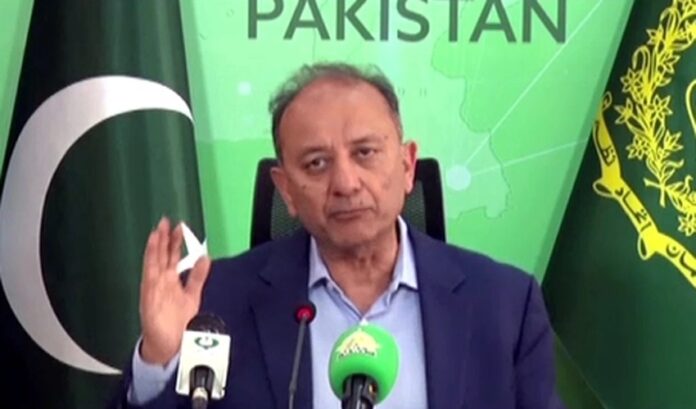
ISLAMABAD: Federal Minister for Climate Change Musadik Malik has issued a strong warning to India, stating that the construction of storage dams on the Indus River system would be seen as an “act of war.”
Speaking to Bloomberg on Monday, Malik accused India of deliberately manipulating water flows to destabilize Pakistan’s agriculture and food security.
He alleged that India has been strategically holding and releasing water to prevent it from reaching Pakistan during critical crop sowing periods.
While the government has yet to determine the exact impact, Malik warned that such actions are damaging Pakistan’s crop patterns and threatening long-term food stability.
Tensions Rise Over Indus Waters Treaty
The minister highlighted that India had unilaterally suspended the Indus Waters Treaty following the April 22 militant attack in Pahalgam, located in Indian Illegally Occupied Jammu and Kashmir (IIOJK).
According to Malik, water flow from the Chenab River was reduced by nearly 90% in the aftermath of the attack.
However, India’s inability to store large volumes of water—due to the absence of storage dams—has limited its immediate impact.
He made it clear that any move by India to construct storage dams would drastically shift the balance and escalate tensions to a point of open conflict.
Such actions, he stated, would be interpreted as a declaration of war by Pakistan, underlining the high stakes of water disputes in the region.
Diplomatic Engagement and International Mediation
Malik also addressed efforts to renegotiate the Indus Waters Treaty, explaining that Pakistan responded to India’s requests for dialogue.
However, India failed to clarify which treaty clauses it sought to revise, stalling progress on a peaceful resolution.
He acknowledged the role of international actors—including the US, UK, Saudi Arabia, and UAE—in mediating the recent military standoff between the two nuclear-armed neighbors.
Currently in London as part of a delegation led by Bilawal Bhutto Zardari, Malik is presenting Pakistan’s case to global stakeholders amid escalating Indo-Pak tensions.