Caracas : On Monday, Venezuela’s National Assembly formally appointed Delcy Rodríguez as interim president, just 48 hours after US forces detained Nicolás Maduro and transported him to New York to stand trial.
This unexpected change in leadership came on the heels of a dramatic US military operation that sent shockwaves through Venezuela and attracted global attention.
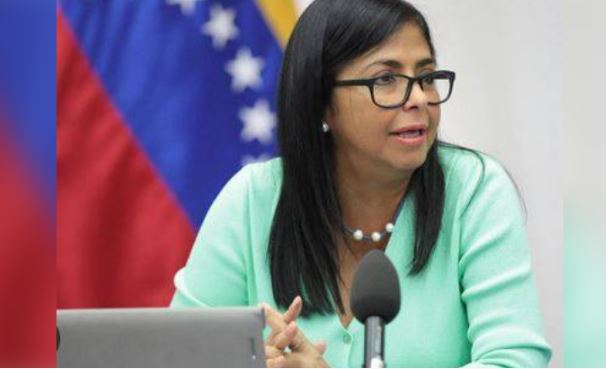
Rodríguez, who has expressed willingness to engage with Washington, took the oath of office during a special session of the National Assembly, where she pledged to lead on behalf of the Venezuelan people. During her emotional speech, she condemned the detention of Maduro and his wife, Cilia Flores, both facing drug-related charges in the US, referring to them as “our heroes.”
Lawmakers in the National Assembly criticized the US action, calling it an affront to Venezuela’s sovereignty, but they also voiced strong support for Rodríguez, rallying behind her as she stepped in for the detained leader.
Outside the assembly, large crowds of protesters gathered, calling for Maduro’s release. Supporters waved flags and chanted slogans, asserting that Venezuela was standing strong in his defense.
Inside the chamber, Rodríguez received unanimous backing from parliamentarians. Lawmakers also voted to keep her brother, Jorge Rodríguez, as head of the National Assembly. During the session, the chamber echoed chants linked to Maduro’s controversial 2024 presidential campaign, which has been widely condemned by the opposition and foreign governments, including the US, as fraudulent.
The shockwave from Maduro’s detention began with a series of US-led airstrikes in Caracas early on Saturday, followed by the capture of Maduro and Flores. US President Donald Trump had authorized the operation, with the pair being flown to New York to face charges related to drug trafficking.
Fernando Soto Rojas, a senior lawmaker, lashed out at the US, accusing it of overstepping its authority by acting as both judge and enforcer. He reiterated Venezuela’s unwavering support for Maduro, calling him the country’s legitimate president and vowing to fight for his return to the Miraflores Palace.
Later that evening, tensions escalated near the presidential palace. Gunfire was reported in the vicinity, and sources close to the government said that unidentified drones were seen near the Miraflores complex. Security forces responded by opening fire, but officials later confirmed that the situation was under control.
Meanwhile, in New York, Nicolás Maduro, dressed in prison garb, appeared in a Manhattan federal court. He pleaded not guilty to charges, including narco-terrorism, conspiracy to import cocaine, and possession of illegal weapons. Maduro denied all accusations, maintaining that he is still Venezuela’s legitimate president.
US prosecutors claim that Maduro ran a vast cocaine trafficking operation in partnership with violent organizations such as Mexico’s Sinaloa and Zetas cartels, Colombia’s FARC rebels, and Venezuela’s Tren de Aragua gang. Maduro has consistently denied the charges, asserting his innocence.