Tehran : Iranian President Dr Masoud Pezeshkian has said Iran is willing to further strengthen cooperation with Pakistan in political, economic, trade, cultural and security sectors, stressing that closer ties between the neighbouring countries can contribute to regional peace and stability.
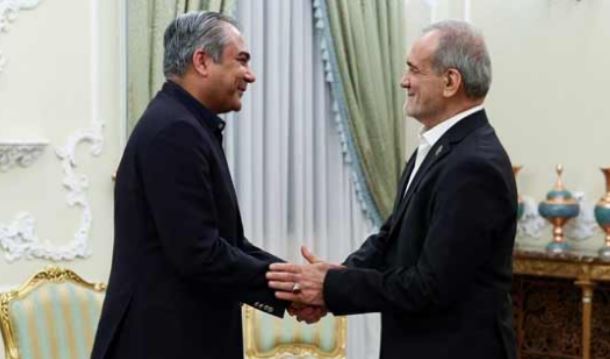
He made the remarks during a meeting with Federal Interior Minister Mohsin Naqvi in Tehran.
President Pezeshkian said stronger relations between Iran and Pakistan would benefit both countries while also supporting efforts to promote peace and stability throughout the region.
He expressed Tehran’s willingness to work alongside Islamabad to identify and develop new areas of mutual cooperation.
The Iranian president also welcomed Pakistan’s interest in expanding bilateral relations, saying the longstanding historical and cultural links between the two countries offered a strong basis for further strengthening cooperation.
The meeting also included discussions on bilateral relations, security cooperation and the prevailing situation in the region.
During the meeting, Interior Minister Mohsin Naqvi conveyed special messages to President Pezeshkian from Prime Minister Shehbaz Sharif and Chief of Army Staff (COAS) and Chief of Defence Forces (CDF) Field Marshal Syed Asim Munir.
Naqvi described Pakistan-Iran relations as longstanding and significant, and reiterated Islamabad’s determination to broaden cooperation with its neighbouring country across a range of fields.