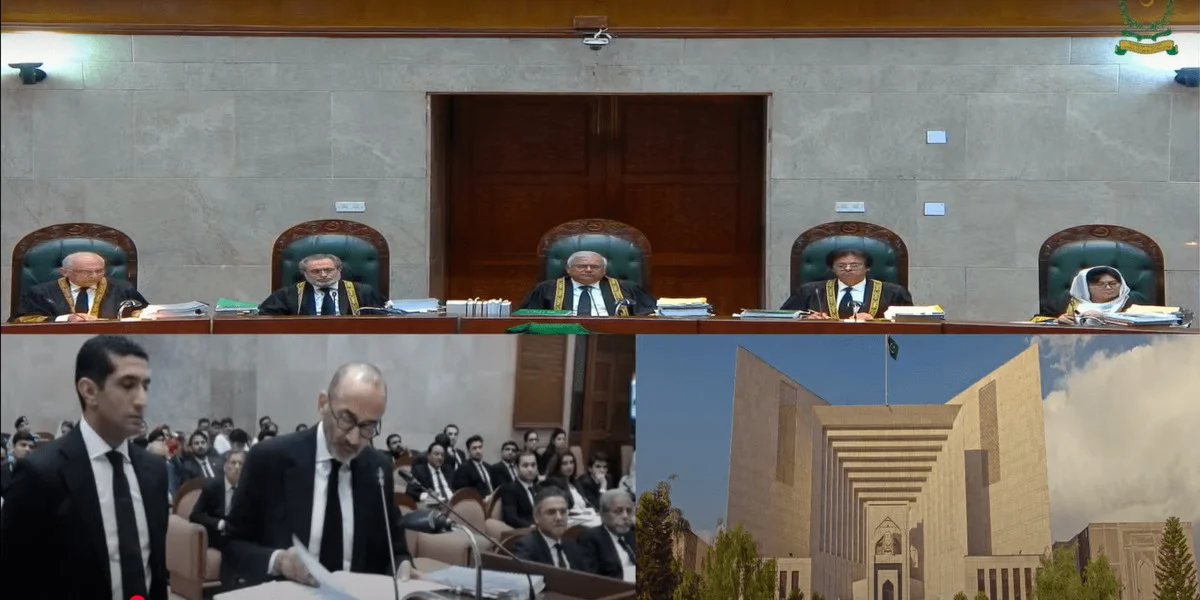
ISLAMABAD: For the very first time in the country’s judicial history, a high-stakes constitutional hearing was streamed live — and it was nothing short of dramatic.
A powerful 13-member bench took center stage, diving deep into a controversial case tied to reserved political seats. This wasn’t just about legal arguments; it was a rare moment where raw legal power met public transparency.
The case revolves around the legitimacy of allocating reserved seats to a political party.
While intense arguments unfolded, viewers got front-row access to the judges’ sharp observations and the lawyers’ strategic rebuttals — making justice feel more real, more immediate.
The Real Stakes Behind the Courtroom Walls
This isn’t just a legal debate — it’s a political storm.
Top legal minds clashed over whether individuals or parties held the key to reserved seats. With political futures on the line, lawyers pulled out every trick in the book.
One side aimed to retain power; the other sought to rewrite the rules.
What made this moment even more electric was the symbolism: the courtroom wasn’t behind closed doors anymore.
For once, the people weren’t just spectators of political outcomes — they were watching the foundations of those outcomes being built, live.