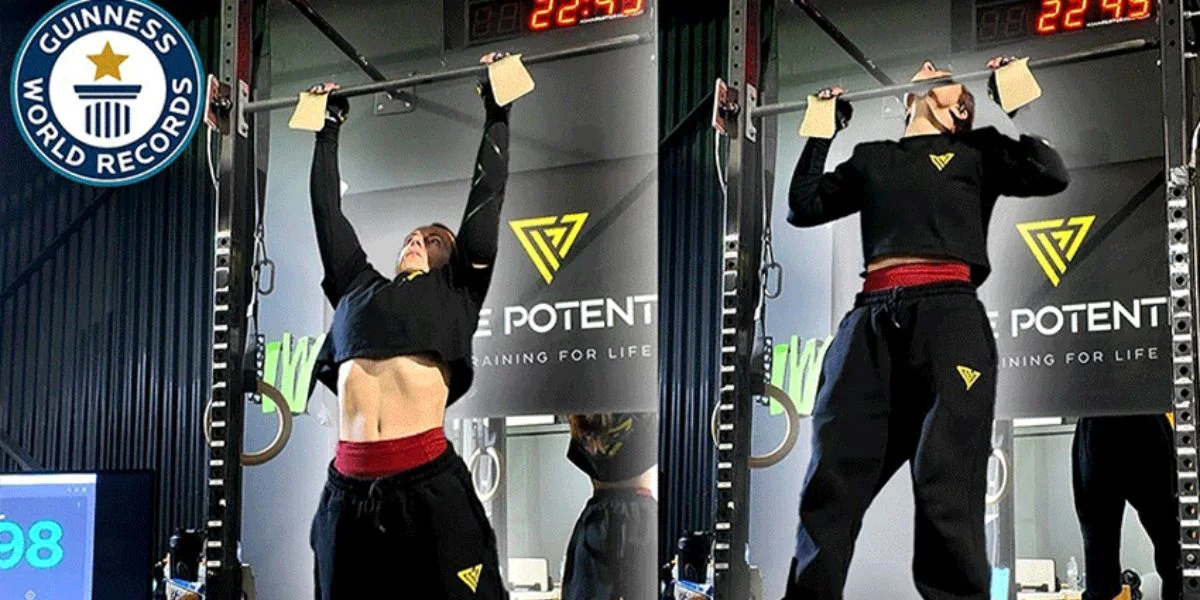
ISLAMABAD: In a stunning display of endurance and determination, 34-year-old Australian athlete Olivia has set a new world record by completing an astounding 7,000 pull-ups in 24 hours, nearly doubling the previous benchmark.
Her achievement has not only rewritten the record books but also redefined what is physically possible.
The previous record stood at 4,081 pull-ups, held by Paula Gorlo of Poland since 2021. Olivia surpassed that milestone during an intense attempt held between March 29 and 30, 2025. But the path to this extraordinary feat was anything but easy.
From Injury to History-Maker
Olivia’s journey began in September 2024, when she attempted the record for the first time. After three months of rigorous training, she made it halfway before a torn bicep tendon in her left arm forced her to stop after 12 hours. “At that point, I couldn’t even do a single pull-up,” she recalled.
After a two-month recovery period, she returned to her training with renewed focus. A 12-hour practice session helped prepare her both physically and mentally.
By the time March 2025 arrived, she was ready to take on the challenge again—with a full-day schedule, an earpiece timer that buzzed every 45 seconds, and a printed breakdown of her rep goals.
Breaking Limits and Redefining Belief
Despite impeccable preparation, the final push wasn’t without struggles. Around the 19-hour mark, fatigue set in and nausea took hold, but Olivia powered through, averaging five pull-ups every minute for the full 24 hours.
Her record-breaking performance has left her with a changed perspective on self-belief and human capability. “I’ve achieved a number that I genuinely didn’t think was possible for me. I think world records create a very tangible marker for human potential,” she said.
This incredible milestone now stands not just as a world record but as a testament to resilience, planning, and the power of pushing beyond mental and physical limits.