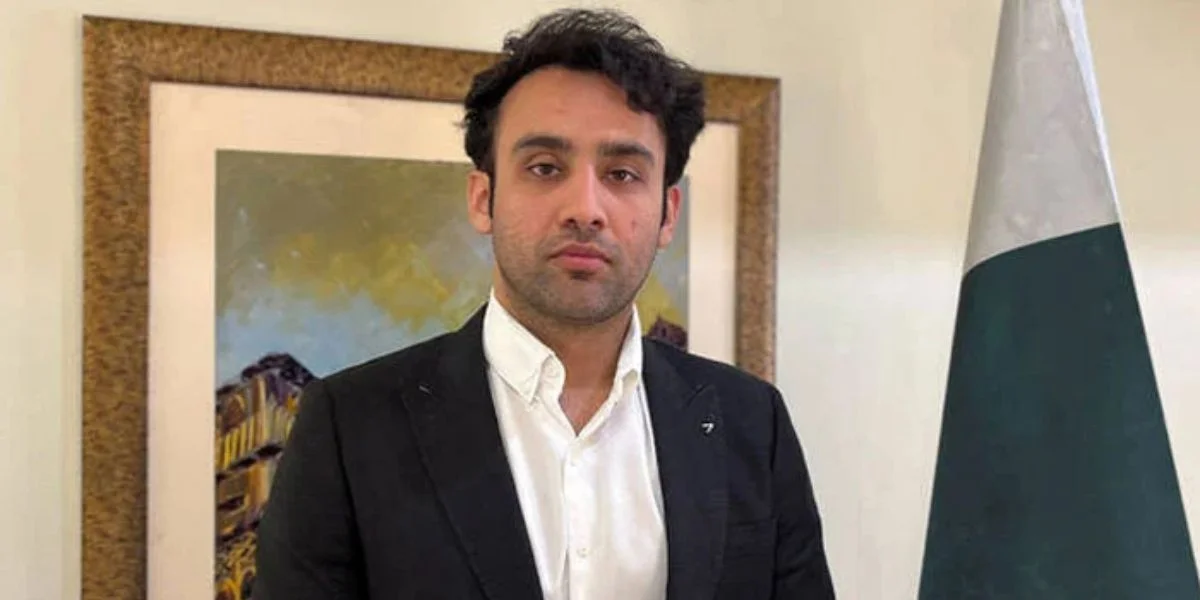
ISLAMABAD: The Government of Pakistan is actively working on a robust regulatory framework for digital currencies that aligns with the policies of the Financial Action Task Force (FATF), according to Special Assistant to the Prime Minister (SAPM) on Blockchain and Crypto, Bilal Bin Saqib.
Appearing on Geo News’ programme Naya Pakistan, Saqib revealed that a comprehensive national policy on cryptocurrency is being formulated by the Pakistan Crypto Council (PCC), which he heads as CEO.
He emphasized the critical need to regulate digital currencies, stating that failure to do so would pose significant financial and security risks to the country.
Aligning Crypto with Global Standards
Saqib clarified that the goal is to align Pakistan’s digital finance strategy with international anti-money laundering standards. “Globally, only 0.024% of crypto usage is linked to illicit activity, whereas 2% to 4% of cash transactions fall into this category,” he said. This, he argued, is evidence that regulated crypto can offer more transparency than conventional currency systems.
He also addressed misconceptions regarding the government’s approach to Bitcoin. “We are not using taxpayer money to purchase Bitcoins,” he stated. “Instead, we will place seized Bitcoins into a national Bitcoin wallet, and this wallet will also be used to receive global donations.”
Mining and AI: A New Digital Frontier
The SAPM announced that Bitcoin mining would take place through a public-private partnership, with electricity being the government’s only contribution. “No fixed electricity price has been set; each partnership will be evaluated on a case-by-case basis,” he explained.
He also confirmed that at least six countries have already shown interest in participating in Pakistan’s crypto initiative.
As part of the broader strategy, the government plans to use 2,000 megawatts of surplus electricity to power both Bitcoin mining and AI data centres.
Finance Minister Muhammad Aurangzeb recently said this move would convert idle infrastructure into valuable digital assets.