Islamabad : Prime Minister Shehbaz Sharif on Friday underscored the importance of expanding affordable financing for Pakistan’s priority sectors, saying greater access to credit is key to achieving sustainable economic growth and strengthening the national economy.
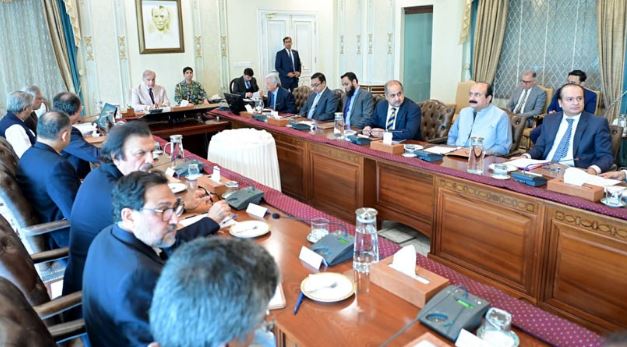
Presiding over a high-level meeting in Islamabad to review the Access to Finance Plan, the prime minister described small and medium-sized enterprises (SMEs) as a driving force of the economy and urged commercial banks to significantly increase lending to the sector.
He said improving access to finance would help boost exports, create employment opportunities and accelerate economic activity. Shehbaz Sharif also said banks that play a stronger role in financing priority sectors would be encouraged under the government’s policy framework.
To ensure effective implementation, the prime minister announced that he would personally monitor the Access to Finance Plan through monthly review meetings.
Reiterating the government’s commitment to economic reforms, he said expanding financial inclusion is essential for building a competitive, export-led economy.
During the meeting, officials presented the roadmap and key objectives of the Access to Finance Plan, which aims to help Pakistan move from economic stability towards long-term and inclusive growth.
According to the briefing, the strategy seeks to expand financial services across the country and integrate more individuals and businesses into the formal banking system. It also prioritises improving access to affordable financing for SMEs, agriculture, export industries, renewable energy, housing and the information technology sector.
Officials said the initiative is expected to increase exports, stimulate investment, strengthen economic growth and generate employment across multiple sectors.
The meeting was informed that the plan will be executed through close coordination among the Ministry of Finance, the State Bank of Pakistan, provincial governments and other relevant institutions.
Under the implementation framework, the finance minister will head the governing body, while the governor of the State Bank will act as co-chair. Progress will be reviewed regularly, with the prime minister receiving monthly performance updates.
Officials also shared two-year targets under the plan, including increasing the share of SME financing in overall private-sector lending from 7 percent to 10 percent and raising the number of SMEs benefiting from bank credit from 310,000 to 750,000.