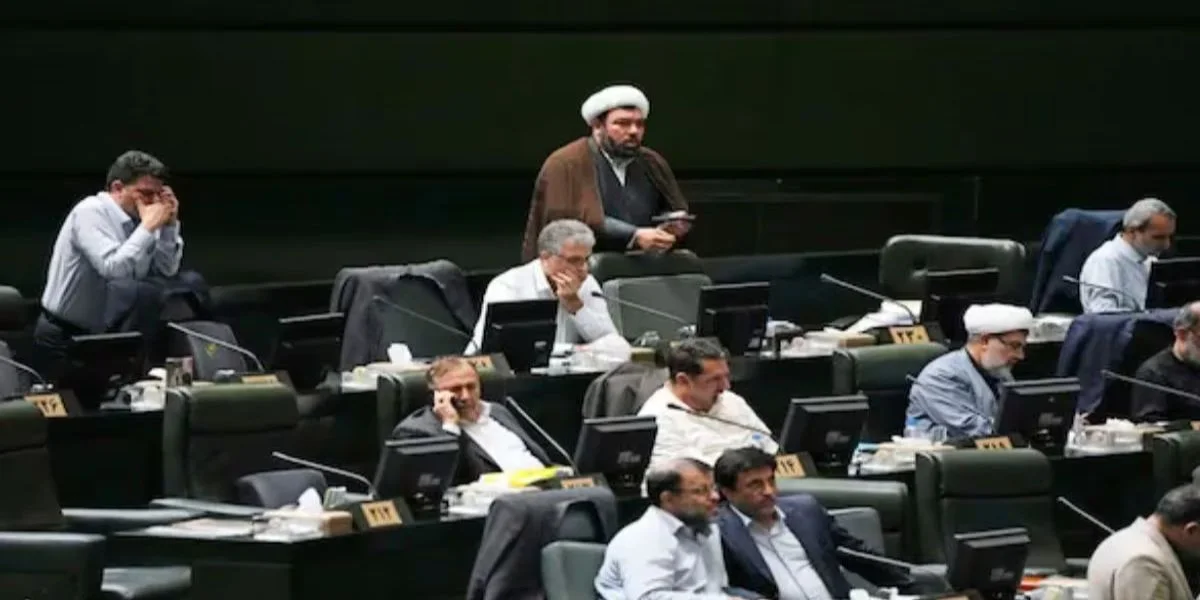
TEHRAN: Iranian lawmakers on Wednesday overwhelmingly voted to suspend cooperation with the United Nations’ nuclear watchdog, accusing the International Atomic Energy Agency (IAEA) of siding with the West after failing to condemn US and Israeli strikes on Iran’s nuclear facilities.
The vote, which passed with 221 in favor and one abstention, now awaits approval from the Guardian Council — a powerful constitutional body that must vet all legislation. If ratified, it will mark a sharp escalation in Tehran’s nuclear standoff with the West following a devastating 12-day war.
“The IAEA, by refusing to condemn even marginally the attacks on our nuclear sites, has auctioned off its international credibility,” said parliamentary speaker Mohammad Bagher Ghalibaf, addressing legislators in a special session broadcast live on state TV.
Under the draft law, the Atomic Energy Organization of Iran would halt all cooperation with the IAEA unless the safety of its nuclear infrastructure is assured. Inspections by IAEA officials would be blocked unless explicitly cleared by the Supreme National Security Council — Iran’s highest security body.
Lawmaker Alireza Salimi stated that the move would give Iran “sovereign control” over site access. “The agency will no longer enjoy free access. Security comes first,” he said, echoing growing national anger.
The diplomatic fallout follows Israel’s large-scale aerial bombardment of Iranian nuclear assets on June 13, which was followed by US B-2 stealth bomber strikes on June 22. The twin assaults targeted facilities at Fordow, Isfahan, and Natanz, severely damaging Iran’s enrichment capacity and reportedly killing several senior military and scientific figures.
The IAEA passed a resolution on June 12 — just a day before the Israeli strikes — accusing Iran of failing to comply with its nuclear obligations under the Non-Proliferation Treaty. Iranian officials have since condemned the resolution as biased and provocative, accusing the agency of providing political cover for subsequent military attacks.
Foreign ministry spokesman Esmaeil Baqaei said Wednesday that Iran’s cooperation with the agency “will definitely be affected” by what he termed the IAEA’s “silence in the face of aggression.”
“This resolution was one of the main excuses used to justify these attacks,” he said in comments to IRNA, Iran’s official news agency.
Following the parliamentary vote, lawmakers erupted into chants of “Death to America” and “Death to Israel,” signaling a hardening of positions in Tehran and setting the stage for an increasingly volatile regional atmosphere.
The move threatens to further isolate Iran diplomatically, especially as world powers call for calm in the aftermath of a precarious ceasefire announced Tuesday. The US and Israel maintain the strikes were necessary to prevent Iran from achieving nuclear weapons capability — a charge Tehran vehemently denies.
Analysts warn that cutting off IAEA oversight could backfire by eroding international support for Iran’s right to peaceful nuclear energy and provide additional justification for future preemptive military action by its adversaries.