ISLAMABAD:
Australia has voiced support for the recent U.S. military strike on Iranian nuclear facilities, while simultaneously urging for immediate de-escalation and a renewed diplomatic process to resolve the crisis.
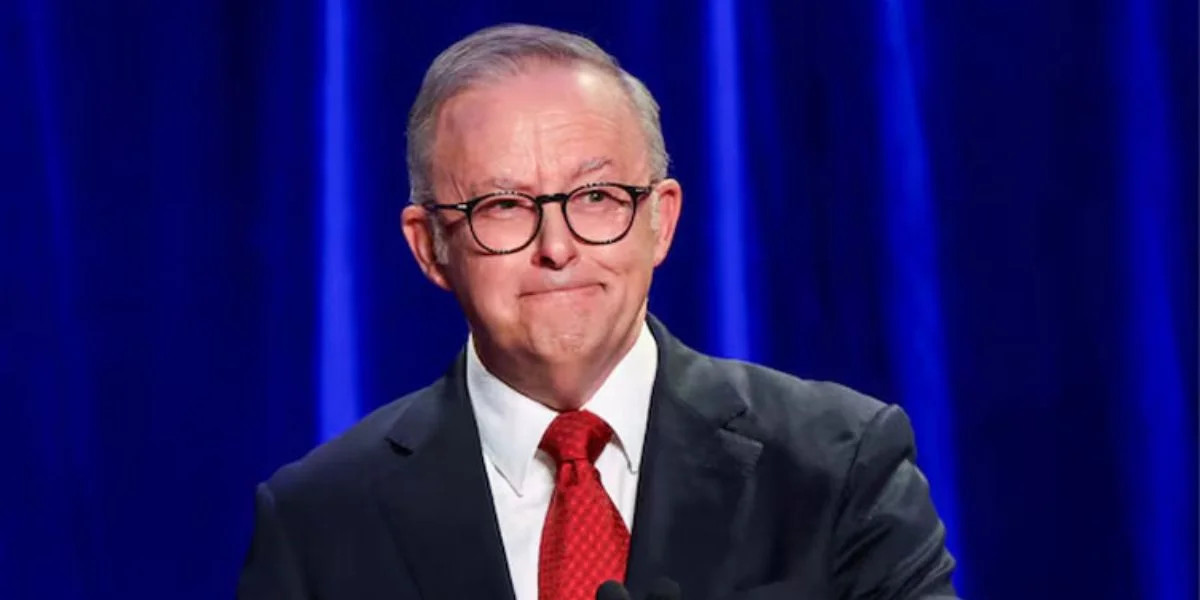
Prime Minister Anthony Albanese, speaking in Canberra on Monday, stated that the world cannot allow Iran to develop a nuclear weapon and that action to prevent this threat was justified.
Albanese pointed to Iran’s uranium enrichment reaching 60% purity, suggesting it clearly exceeded civilian energy needs.
“The information has been clear,” Albanese said.
“There is no other explanation for enrichment to that level, other than preparations for a weapons program.”
He blamed Iran for failing to comply with international demands and inspections from the International Atomic Energy Agency (IAEA), adding that the situation could have been avoided.
Calls for Diplomacy Despite Support
Foreign Minister Penny Wong emphasized that while the strike was a unilateral U.S. action, Australia stands with its security ally in preventing nuclear proliferation.
She echoed calls from the United Kingdom and other Western nations for Iran to return to negotiations immediately.
“We do not want to see escalation,” Wong told reporters in Canberra.
“We support action taken to prevent Iran from acquiring a nuclear weapon, but diplomacy must prevail.”
Wong confirmed that Australia had closed its embassy in Tehran on Friday as a precaution.
She also revealed that Australia has suspended evacuation buses from Israel following the strike but is preparing for civilian evacuations if regional airspace reopens.
Two Australian defence aircraft have been deployed to the Middle East in non-combat roles to assist evacuation efforts.
Regional Evacuation and Allied Support
Currently, around 2,900 Australians remain in Iran, with at least 1,300 requesting evacuation.
Wong said the government is in close coordination with allies and is monitoring the situation continuously.
She noted that her conversation with U.S. Secretary of State Marco Rubio reinforced Canberra’s support for collective security measures in the region.
Meanwhile, New Zealand’s Prime Minister Christopher Luxon and Foreign Minister Winston Peters expressed concern and also urged all parties to return to the negotiating table.
The IAEA has reported that Iran holds enough enriched uranium—if further refined—to potentially produce up to nine nuclear warheads.
As tensions surge, Australia maintains that diplomatic channels must be reopened to prevent a full-scale conflict in the Middle East.