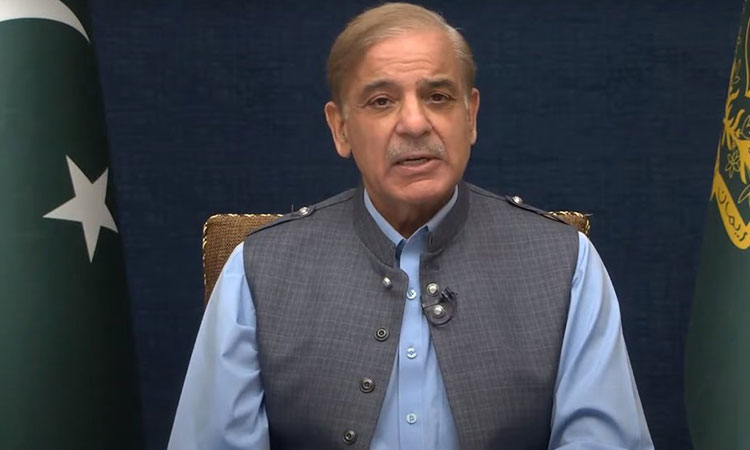
Islamabad : Prime Minister Shehbaz Sharif is scheduled to meet with the representatives of allied political parties today to seek their backing for the 27th Constitutional Amendment. Sources suggest that during the meeting, Law Minister Azam Nazeer Tarar will provide a detailed briefing on the proposed amendment, and the discussion will revolve around the implications of the changes.
The meeting is also expected to address the current situation between Pakistan and Afghanistan, with discussions on shaping the country’s foreign policy in relation to the issue.
Meanwhile, the Pakistan People’s Party (PPP) is convening its Central Executive Committee (CEC) meeting in Karachi today. The CEC will be briefed about the government’s draft of the 27th Amendment. Sources reveal that the PPP has raised five significant concerns regarding the amendment. Among these, the most crucial issues include ensuring that the provinces’ financial share remains above 57%, protecting provincial autonomy, and opposing the suggestion of a unified national curriculum.
In parallel, opposition parties are holding their own meetings to deliberate on the amendment. Under the leadership of Mehmood Khan Achakzai, key opposition figures like Asad Qaiser and Allama Raja Nasir Abbas met with Maulana Fazlur Rehman to discuss the constitutional change. Their goal is to solidify opposition unity and adopt a collective position on the matter.
It is essential to note that to pass the 27th Constitutional Amendment in the National Assembly, a majority of 224 votes is needed. The ruling coalition, which includes the PPP, currently commands the support of 237 members—comprising 125 from the Pakistan Muslim League-Nawaz (PML-N), 74 from the PPP, 22 from the MQM, 5 from the Q League, and 4 from the IPP, along with additional support from individual members of smaller parties and four independent legislators.
On the other hand, the opposition holds 89 seats, including 75 from independent members and 10 from the Jamiat Ulema-e-Islam-Fazl (JUI-F). Smaller opposition groups, such as the Sunni Ittehad Council, Majlis Wahdat-e-Muslimeen, and Balochistan National Party-Mengal, are also part of the opposition bloc.