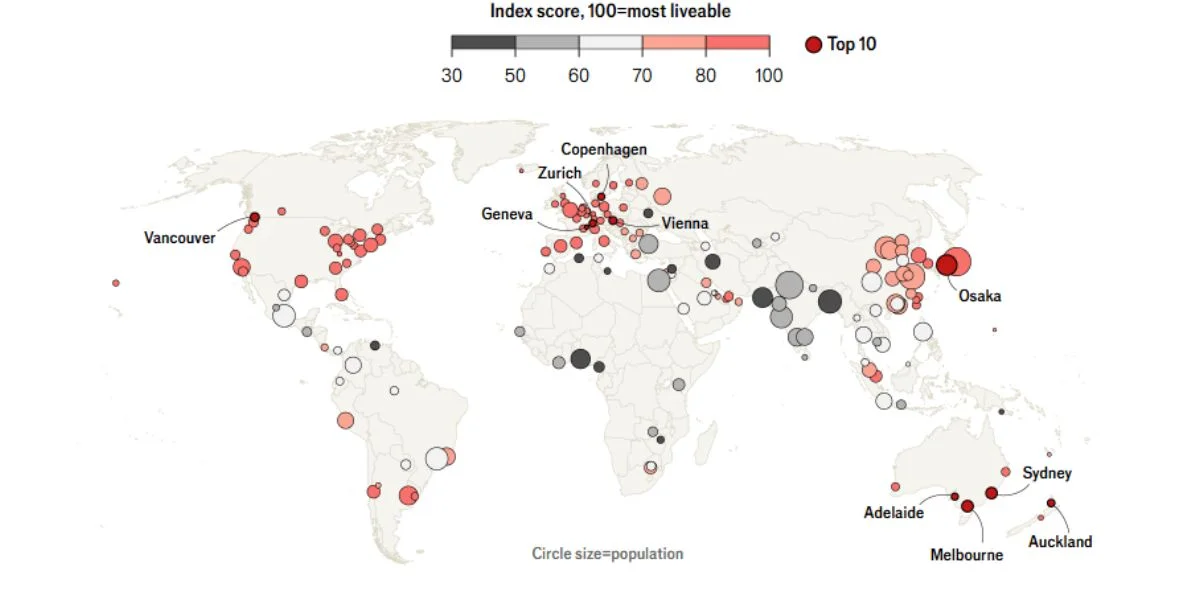
A recent global survey by the Economist Intelligence Unit (EIU) has once again placed Karachi among the world’s most unlivable cities. Karachi ranked 170th out of 173 cities surveyed, placing it among the bottom five. This ranking reflects the severe and ongoing crises faced by the city.
Poor Performance Across Key Sectors
Karachi’s low ranking stems from poor performance in critical areas such as health, education, infrastructure, environment, and stability. The city scored only better than Dhaka, Tripoli, and Damascus in the survey. Karachi was the only Pakistani city to appear on this concerning list.
Regional and Global Context
This year, Copenhagen topped the list with the highest livability score of 98, followed by Vienna, Zurich, Melbourne, and Geneva. Karachi’s ranking has dropped from 169 last year, indicating a worsening situation.
Urban Challenges and Social Divisions
According to an Asian Development Bank report, rising class divisions and ethnic and religious tensions have fueled violent clashes in Karachi. The shortage of land and housing has pushed the city toward vertical expansion, complicating urban management further.
Security Risks and Tourism Concerns
Forbes Advisor has ranked Karachi as the second most dangerous city worldwide, citing issues related to personal safety, crime, terrorism, and other threats. The U.S. Department of State has also declared Karachi a high-risk travel destination.